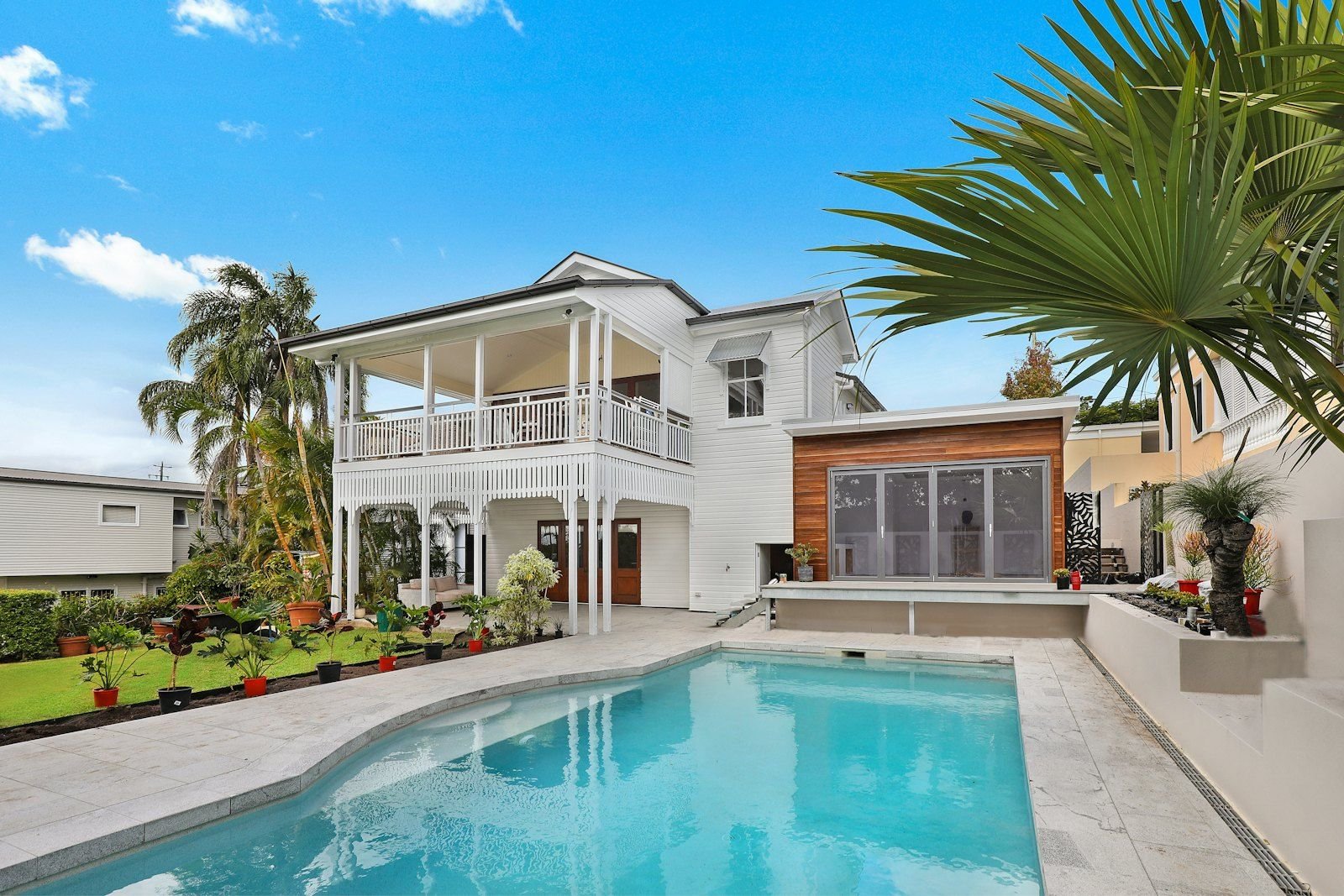
Few combinations of surfaces around a Dothan home create as much day-to-day slip risk as a shaded, screened pool area, which is why this pairing gets its own dedicated approach rather than a generic patio quote. A pool deck in the Wiregrass stays damp more hours of the day than almost any other surface on the property, and a screen enclosure around it traps humidity instead of letting a breeze clear it. Between the two, this is one of the more reliably algae-prone combinations we see, and it comes with a real safety dimension the rest of the yard does not: a slick pool deck is a fall risk for kids, grandparents, and anyone walking out in wet feet.
Why pool decks get slippery faster than a regular patio
The biology is the same organism causing green siding and black roof streaks elsewhere — algae and cyanobacteria that thrive in consistent moisture and shade. A pool deck gets more consistent moisture than almost any other hardscape on the property, between splash-out, humidity, and sprinkler overspray, and a screened enclosure on top of that blocks enough direct sun and airflow to keep the surface damp for extra hours after each use. The result is a biofilm that is not just unsightly the way dirt is — it is genuinely more slippery than ordinary dirt or algae on a dry patio, because the organism itself, combined with constant moisture, creates a slick coating on the surface texture.
Cool-deck and other coated pool surfaces need their own approach
Many pool decks in this area are not bare concrete but a troweled-on textured coating, often called cool-deck or a similar product name, designed to stay cooler underfoot in direct sun than plain concrete would. These coatings are thinner and less durable than the structural concrete underneath, and they can be damaged by the same high-pressure, tight-tip approach that works fine on an uncoated driveway. A surface cleaner at reduced pressure, paired with an algae-specific chemical treatment and a longer dwell time rather than more force, is the right approach on a coated deck — similar in philosophy to how a wood deck gets treated gently rather than blasted, covered on the deck and fence post. Bare stamped or broom-finished concrete around a pool tolerates more pressure, closer to a standard driveway, but still benefits from the algae-specific chemical step rather than pressure alone, since pressure only knocks growth off temporarily without addressing the biofilm at its root.
Paver pool decks are a third category entirely
Pavers — individual interlocking concrete or stone units rather than a poured slab — need the gentlest approach of the three common pool-deck materials. High pressure directed into paver joints can blow out the polymeric sand that locks the pavers in place, leading to shifting, weed growth in the gaps, and an uneven surface over time. A paver pool deck gets washed at controlled, moderate pressure with attention to working across the joints rather than directly into them, and the sand is checked and typically refreshed after a thorough wash, since even a careful wash removes some of it.
The screen enclosure itself
The screen mesh and the aluminum frame holding it both collect algae and mildew, usually heaviest at the bottom few feet where splash-out and standing humidity concentrate, and along any section shaded by a roofline or nearby tree. Screen mesh is delicate — too much pressure tears it, and a standard pressure-washer tip held even briefly at close range will put a hole in most residential screen material. This is a soft-wash job in the truest sense: an appropriate cleaning solution applied with very low pressure, often closer to a pump sprayer than a pressure washer, allowed to dwell on the mesh and the frame, then rinsed gently. The aluminum frame itself can develop the same tiger-stripe oxidation staining covered on the gutter stripes post, since it is the same metal and the same basic chemistry, just on a frame instead of a gutter.
Sequencing a full pool-area visit
A typical pool-area visit works from the top down and the enclosure inward, for the same reason any exterior wash sequences that way: so that debris and runoff from an upper surface do not re-dirty a surface already cleaned. The screen enclosure frame and mesh get addressed first, since any rinse water or chemical overspray will land on the deck below regardless of how careful the application is. The deck itself follows, treated according to its specific material — coated, bare concrete, or paver — as described above. Pool equipment, handrails, and any built-in features get a final pass, with particular care taken around the pool water itself, since most algae-treatment chemicals are not meant to be introduced into the pool in meaningful quantity, and a careful crew works to minimize overspray directly into the water.
Why this is not a DIY-friendly combination
More than most of the jobs on this site, pool decks and screen enclosures together carry enough combined risk — screen mesh that tears easily, coated decking that scratches or dulls under the wrong pressure, and a slip-and-fall risk on a wet pool deck during the work itself — that we see more DIY attempts go wrong here than on an open driveway or a simple fence line. A rented pressure washer with no chemical system and no adjustable low-pressure setting is poorly suited to screen mesh specifically, and the margin for error on a coated deck is narrower than most homeowners expect going in.
Timing around pool season
Spring, before pool season opens for the summer, is the most common time to book this kind of combined visit, for an obvious reason — nobody wants to discover a slippery deck the first week the pool reopens for the year. That said, a heavily shaded or heavily used pool area can need a mid-summer touch-up as well, particularly on the shaded side of the enclosure where growth outpaces the rest of the structure. A fall visit, before the enclosure sits mostly unused and humid through winter, is a reasonable second touchpoint for properties with heavy growth patterns, similar to the two-visit seasonal approach described on the best time to pressure wash post.
What to do between professional visits
A homeowner can meaningfully extend the time between full professional visits with a few simple habits. Rinsing the deck with a garden hose after particularly humid stretches or heavy pool use helps interrupt the algae’s growth cycle before it establishes a foothold, though it will not remove established growth once it has formed a biofilm. Keeping overhanging tree branches trimmed back from the enclosure, where practical, reduces both leaf debris accumulation and the shade that accelerates growth in the first place. And addressing any standing water on the deck — a low spot that does not drain properly after rain or pool splash-out — is worth flagging to a pool contractor, since a chronically wet spot will always be the first place algae reappears no matter how recently the whole deck was treated.
A note on diving boards, ladders, and pool-adjacent hardware
Metal pool ladders, diving board supports, and handrails develop their own version of the gutter-stripe problem covered elsewhere on this site — a combination of oxidation and mineral deposit from constantly wet, chlorinated conditions. These components typically need a different, often milder chemical approach than the deck or screen, since chlorine exposure and pool chemistry interact differently with metal hardware than ordinary rainwater runoff does, and some hardware finishes are more sensitive to acidic cleaners than aluminum gutter coil is. We address these as part of a full pool-area visit but treat them as their own small scope within it, not as an extension of the deck or enclosure chemistry.
How enclosure size and pool-area layout affect scheduling
A compact screened porch with a plunge pool takes a fraction of the time of a full cage enclosure spanning a large in-ground pool and surrounding lanai, both in screen square footage and deck square footage. Beyond size, layout matters too — an enclosure with multiple access doors, built-in planters, or an outdoor kitchen integrated into the pool area adds complexity that a simple rectangular cage and deck does not have. None of this changes the fundamental method used, but it does mean two pools of similar size can take noticeably different amounts of time depending on how much additional structure and detail work the layout requires.
Pool deck and enclosure FAQ
Can the pool water be affected by washing the deck and enclosure around it? A careful crew minimizes chemical overspray directly into the pool, but some incidental drift is difficult to eliminate entirely around a pool that is only a few feet from the deck being treated. If the pool is actively in use or recently balanced chemically, mentioning that when booking lets the crew plan extra care, and checking your pool chemistry after a nearby wash is a reasonable precaution.
How often does a screened pool enclosure need cleaning in this climate? Heavily shaded enclosures with limited airflow can show visible growth within one to two years; a well-ventilated, sun-exposed enclosure may go longer. The humidity trapped inside most enclosures generally means a faster regrowth cycle than open-air siding on the same property.
Will cleaning restore full slip resistance to a coated pool deck, or does the coating itself need replacing eventually? A proper algae and biofilm treatment restores most of the lost slip resistance in the vast majority of cases, since the slickness is mostly the living growth rather than the coating itself wearing smooth. A coating that has become genuinely worn thin or smooth from years of foot traffic and chemical exposure, independent of any algae, is a separate resurfacing conversation with a pool deck contractor rather than something a wash addresses.
Does screen replacement ever make more sense than cleaning an old enclosure? If the screen mesh is already torn, heavily UV-degraded and brittle, or has multiple failed sections, cleaning around those areas does not restore structural screen integrity. In that situation, we will say so rather than charging to wash screen that is past the point where cleaning meaningfully helps, and a rescreening contractor is the better next call.
Is a pool deck and enclosure wash typically priced with the rest of a house wash, or separately? It is usually quoted as its own line item, since the materials, methods, and time involved differ enough from a standard house and driveway wash that bundling them into one flat number would misrepresent either job. It can still be scheduled in the same visit as other exterior work, which is often more convenient than a separate trip.
Should the pool be covered or the pump turned off during the wash? Covering the pool, if you have a cover, is a reasonable extra precaution against overspray, though not strictly required. Leaving the pump running is generally fine and does not need to be shut off for the deck and enclosure work; any specific concerns about your particular pool setup are worth raising when scheduling.
Does a newly built or newly screened enclosure need this kind of cleaning sooner than expected? Not usually in the first year or two, since new screen and a new deck coating have not yet accumulated meaningful growth. The timeline described earlier in this article — one to two years for heavily shaded enclosures — generally starts from substantial completion of the pool area, not from the home’s original construction date if the pool and enclosure were added later.
Do above-ground pools with a simple deck need the same approach as an in-ground pool and enclosure? The same principles apply at a smaller scale — a wood or composite deck around an above-ground pool follows the deck guidance, and any surrounding concrete or paver walkway follows its own material-specific method, even without a full screened structure involved.
Can the enclosure frame be brightened the same way a gutter is brightened? Often yes, since both are typically aluminum developing similar oxidation-driven staining. The same caution about a test patch before treating the full frame applies here as it does for gutters.