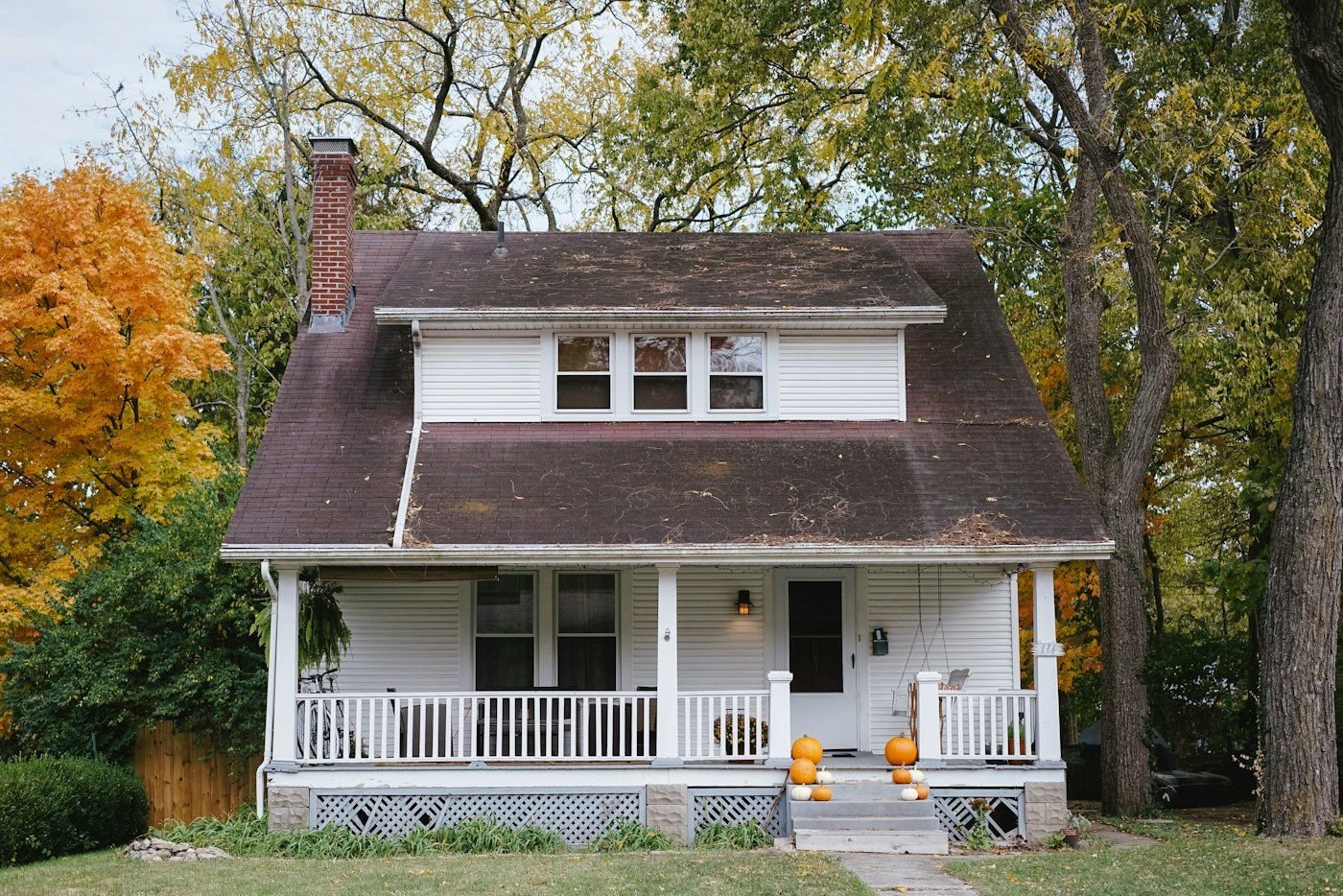
Look up from the driveway on a humid afternoon and the north slope is striped. The south slope, the one that bakes, may still look even. That pattern is the tell. Something is growing where the shingles stay damp, and it is following the water.
What Are the Dark Streaks on Dothan Shingle Roofs?
The usual organism is Gloeocapsa magma, a cyanobacteria that forms dark colonies. People call it roof algae or mold. The streaks begin near the ridge and run down because rain carries cells along the same paths every storm. Moss is greener and thicker, and it shows up in debris-filled valleys and in shade that never dries. Lichen is the crusty patch that does not rinse off with a hose. All three get called “black streaks” in a text message. They are not identical, and the heavy lichen takes longer to release.
A stain that is actually granule loss looks bald and brown, not striped from the ridge. Washing will not glue granules back on. If that is what the photo shows, we say so.
Why High Humidity & Shade Feed Gloeocapsa Magma
Dothan summers are hot and wet. Roofs hit temperatures that would seem to sterilize a shingle, then a thunderstorm cools them and the colonies carry on. Shade from pines, and the north orientation, keeps a slope in the growth zone longer each day. Limestone filler in many asphalt shingles is food. That is why two neighboring houses can look different: different shingle filler, different shade, different age.
The colonies are slow. A roof does not streak because of one wet week. It streaks because the conditions never really stop. Cleaning resets the clock. It does not change the shade or the climate. Streaks can return in a few years on a bad slope. Zinc or copper strips near the ridge are a homeowner project some people add afterward. We do not pretend a wash is a permanent vaccine.
Insurance Non-Renewal Warnings & Roof Lifespan
Letters show up. A carrier’s inspection photo flags “organic growth” or “debris” and gives a deadline. An HOA letter does the same thing with a different logo. Growth is something a soft wash can address. Curled shingles, exposed fiberglass, and a soft deck are not. We will not tell you a wash will save a policy if the letter is really about age.
There is a second, quieter issue. The algae consumes the filler that helps the shingle resist weather, and a dark roof runs hotter. Neither fact means your roof fails this year. Both are reasons to remove the growth with a method that does not scrape the granules off while you are at it. High pressure is that scrape. The warranty article and the method guide are the longer versions.
If the letter is from an association, the HOA cleaning page covers photos and deadlines. Roof work that is actually a wash lives here and on the service page.
How Low-Pressure Treatment Stops Regrowth
The colonies die when the right dilution of sodium hypochlorite, made for roofs and applied at low pressure, sits on them. They release over the following days as weather and a gentle rinse carry the dead film off. Pressure is not what removes them. Pressure is what removes the shingle’s armor.
We do not repeat the whole ladder procedure on this page. The step-by-step, including metal roofs, tile, and the plant rinse under the dripline, is roof soft washing in Dothan. Book that service if the diagnosis matches what you see. Send the insurance or HOA wording with the photo so the quote answers the letter you actually received.
Black Roof Streak FAQ
A typical roof treatment often falls around $350–$750. That is a typical range, estimate only, and it moves with pitch, height, and how much lichen is in the shade. The price guide has the same figure next to the house and the driveway so you can see a whole-property visit in one place.